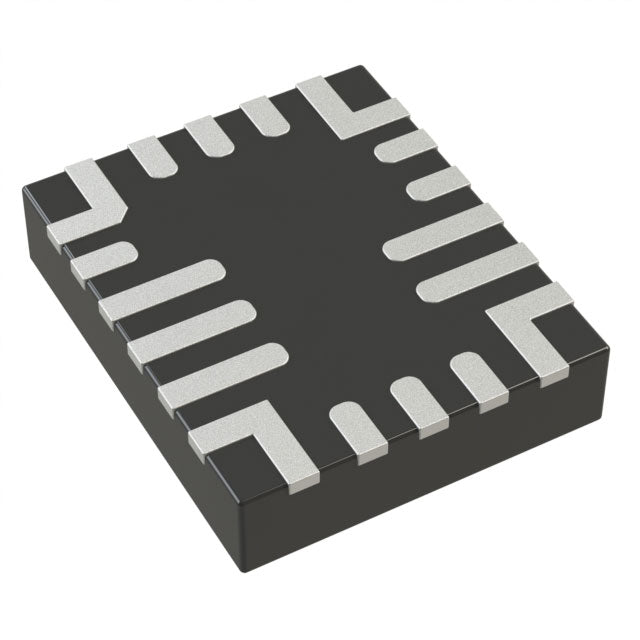
Texas Instruments BQ25620RYKR

| Quantity | Unit Price | Total Price |
|---|---|---|
| 1 | $3.51 | $3.51 |
| 15+ | $3.39 | $50.85 |
| 25+ | $3.32 | $83.00 |
| 50+ | $3.14 | $157.00 |
| 100+ | $2.77 | $277.00 |
| N+ | $0.55 | Price Inquiry |
Request Quote / Inquiry
| Product attributes | Property Value |
| Manufacturer | Texas Instruments |
| Product Series | |
| Packaging | Cut Tape (CT) | Tape & Reel (TR) |
| Battery Chemistry | Lithium Ion/Polymer |
| Number of Cells | 1 |
| Current - Charging | Constant - Programmable |
| Programmable Features | Current, Timer, Voltage |
| Fault Protection | Over Current, Over Temperature, Over-Under Voltage, Short Circuit |
| Charge Current - Max | 3.5A |
| Battery Pack Voltage | 4.8V (Max) |
| Voltage - Supply (Max) | 18V |
| Interface | I2C |
| Operating Temperature | -40°C ~ 85°C (TA) |
| Grade | - |
| Qualification | - |
| Mounting Type | Surface Mount |
| Package / Case | 18-PowerWFQFN |
| Supplier Device Package | 18-WQFN-HR (3x2.5) |
| ROHS |  |
The BQ25620RYKR is a high-performance single-cell Lithium Ion/Polymer battery charger from Texas Instruments. It supports a maximum charge current of 3.5A and a battery voltage up to 4.8V, enabling fast and efficient charging. The I2C interface provides flexible configuration and monitoring. Comprehensive fault protection includes Over Current, Over Temperature, Over-Under Voltage, and Short Circuit safeguards. With an operating temperature range of -40°C to 85°C, it is suitable for consumer and industrial portable devices. The 18-PowerWFQFN package is optimized for compact PCB layouts.
- Fast Charging: 3.5A maximum current significantly reduces charge time.
- Comprehensive Protection: Over Current, Over Temperature, Over-Under Voltage, and Short Circuit protection ensure safe operation.
- Digital Programmability: I2C interface allows dynamic adjustment of charging parameters.
- Wide Operating Range: -40°C to 85°C supports diverse environmental conditions.
Smartphones and Tablets
The BQ25620RYKR's 3.5A charge current and I2C control make it ideal for fast-charging single-cell Li-Ion/Polymer batteries in modern smartphones and tablets.
Portable Power Tools
With robust protection features including Over Current and Short Circuit, it is suitable for battery packs in compact power tools.
Drones and Robotics
High charge current and wide temperature range (-40°C to 85°C) support demanding drone and robotics applications.
Wearable Devices
The small 18-PowerWFQFN package and comprehensive protection make it a fit for wearables requiring safe, space-efficient charging.
Portable Medical Equipment
Reliable Over-Under Voltage and Over Temperature protection ensure safe charging for sensitive medical devices.
- Q: What battery chemistry does the BQ25620RYKR support?
- A: It supports Lithium Ion/Polymer batteries.
- Q: How many cells can it charge?
- A: It is designed for a single cell (1 cell).
- Q: What is the maximum charge current?
- A: The maximum charge current is 3.5A.
- Q: What is the maximum battery voltage?
- A: The maximum battery voltage is 4.8V.
- Q: What fault protections are included?
- A: It includes Over Current, Over Temperature, Over-Under Voltage, and Short Circuit protection.
- Q: What interface does it use?
- A: It uses an I2C interface.
 BQ25620RYKR.pdf
- Q: What battery chemistry does the BQ25620RYKR support?
- A: It supports Lithium Ion/Polymer batteries.
- Q: How many cells can it charge?
- A: It is designed for a single cell (1 cell).
- Q: What is the maximum charge current?
- A: The maximum charge current is 3.5A.
- Q: What is the maximum battery voltage?
- A: The maximum battery voltage is 4.8V.
- Q: What fault protections are included?
- A: It includes Over Current, Over Temperature, Over-Under Voltage, and Short Circuit protection.
- Q: What interface does it use?
- A: It uses an I2C interface.