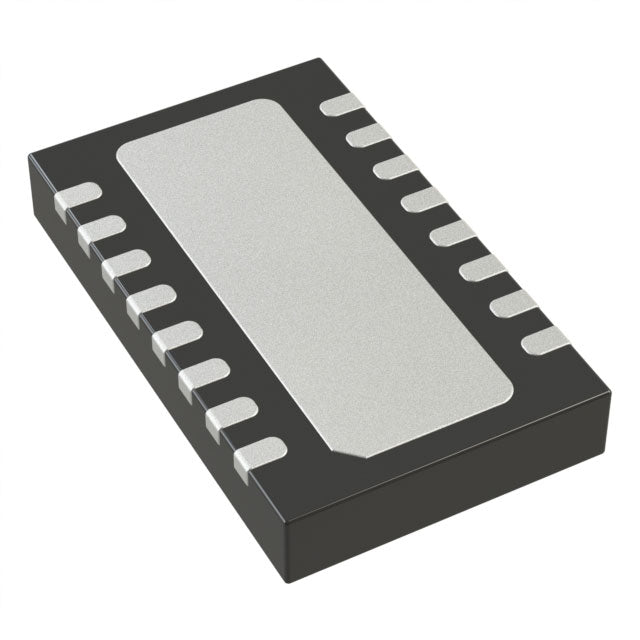
Analog Devices Inc. LTC4060EDHC#PBF

| Quantity | Unit Price | Total Price |
|---|---|---|
| 1 | $12.07 | $12.07 |
| 15+ | $11.69 | $175.35 |
| 25+ | $11.44 | $286.00 |
| 50+ | $10.80 | $540.00 |
| 100+ | $9.53 | $953.00 |
| N+ | $1.91 | Price Inquiry |
Request Quote / Inquiry
| Product attributes | Property Value |
| Manufacturer | Analog Devices Inc. |
| Product Series | |
| Packaging | Tube | |
| Battery Chemistry | Multi-Chemistry |
| Number of Cells | 1 ~ 4 |
| Current - Charging | Constant - Programmable |
| Programmable Features | Timer |
| Fault Protection | Over Temperature, Over Voltage |
| Charge Current - Max | 2.1A |
| Battery Pack Voltage | 1.5V |
| Voltage - Supply (Max) | 10V |
| Interface | - |
| Operating Temperature | -40°C ~ 85°C (TA) |
| Grade | - |
| Qualification | - |
| Mounting Type | Surface Mount |
| Package / Case | 16-WFDFN Exposed Pad |
| Supplier Device Package | 16-DFN (5x3) |
| ROHS |  |
The LTC4060EDHC#PBF is a multi-chemistry battery charger from Analog Devices designed for 1 to 4 series cells. It delivers a maximum charge current of 2.1A with a battery pack voltage of 1.5V. Built-in over temperature and over voltage protection ensures safe charging across its -40°C to 85°C operating range. Housed in a compact 16-WFDFN exposed pad package, this charger suits industrial and portable applications requiring reliable multi-chemistry support.
- Wide temperature range (-40°C to 85°C) enables deployment in industrial and outdoor environments without performance degradation.
- Multi-chemistry support (NiMH/NiCd) provides design flexibility for diverse battery pack requirements.
- High 2.1A charge current reduces charging time for 1-4 cell packs, improving operational uptime.
- Integrated over temperature and over voltage protection enhances system safety and battery longevity.
Industrial Battery Backup Systems
With a wide -40°C to 85°C operating range and multi-chemistry support, the LTC4060EDHC#PBF is ideal for industrial backup power systems that must perform reliably in harsh environments.
Portable Medical Devices
The 2.1A charge current enables fast charging of 1-4 cell NiMH/NiCd packs used in portable medical equipment, while over-temperature protection ensures safe operation during extended use.
Field Instrumentation
Field-deployed data loggers and sensors benefit from the wide temperature range and multi-chemistry flexibility, allowing a single charger design to accommodate different battery types.
Emergency Lighting Systems
The 1.5V battery pack voltage and multi-cell support make this charger suitable for emergency lighting units that rely on rechargeable NiMH batteries for backup power.
Robotics and Automation
Robotic platforms using 1-4 cell NiMH packs can leverage the 2.1A charging capability for quick turnaround between shifts, with over-voltage protection safeguarding the battery pack.
- Q: What battery chemistries does the LTC4060EDHC#PBF support?
- A: It supports multi-chemistry batteries, including Nickel Metal Hydride and Nickel Cadmium.
- Q: How many battery cells can this charger handle?
- A: It can charge 1 to 4 series cells.
- Q: What is the maximum charge current?
- A: The maximum charge current is 2.1A.
- Q: What is the battery pack voltage?
- A: The battery pack voltage is 1.5V.
- Q: What fault protections are included?
- A: It includes over temperature and over voltage protection.
- Q: What is the operating temperature range?
- A: It operates from -40°C to 85°C (TA).
 LTC4060EDHC#PBF.pdf
- Q: What battery chemistries does the LTC4060EDHC#PBF support?
- A: It supports multi-chemistry batteries, including Nickel Metal Hydride and Nickel Cadmium.
- Q: How many battery cells can this charger handle?
- A: It can charge 1 to 4 series cells.
- Q: What is the maximum charge current?
- A: The maximum charge current is 2.1A.
- Q: What is the battery pack voltage?
- A: The battery pack voltage is 1.5V.
- Q: What fault protections are included?
- A: It includes over temperature and over voltage protection.
- Q: What is the operating temperature range?
- A: It operates from -40°C to 85°C (TA).