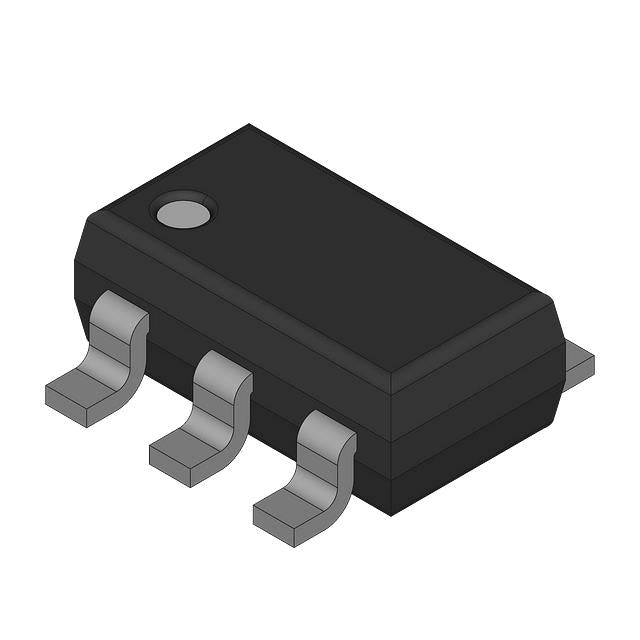
Analog Devices Inc./Maxim Integrated MAX6471TA28BD3+

| Quantity | Unit Price | Total Price |
|---|---|---|
| 1 | $8.24 | $8.24 |
| 15+ | $1.90 | $28.50 |
| 25+ | $1.85 | $46.25 |
| 50+ | $1.75 | $87.50 |
| 100+ | $1.55 | $155.00 |
| N+ | $0.31 | Price Inquiry |
Request Quote / Inquiry
| Product attributes | Property Value |
| Manufacturer | Analog Devices Inc./Maxim Integrated |
| Product Series | |
| Packaging | Bulk | |
| Output Configuration | Positive |
| Output Type | Adjustable (Fixed) |
| Number of Regulators | 1 |
| Voltage - Input (Max) | 5.5V |
| Voltage - Output (Min/Fixed) | 1.2V (2.8V) |
| Voltage - Output (Max) | 5V |
| Voltage Dropout (Max) | 0.21V @ 300mA |
| Current - Output | 300mA |
| Current - Quiescent (Iq) | 136 µA |
| Current - Supply (Max) | - |
| PSRR | - |
| Control Features | Enable, Manual Reset, Reset |
| Protection Features | Over Current, Over Temperature, Reverse Polarity, Short Circuit |
| Operating Temperature | -40°C ~ 85°C (TA) |
| Grade | - |
| Qualification | - |
| Mounting Type | Surface Mount |
| Package / Case | 8-WDFN Exposed Pad |
| Supplier Device Package | 8-TDFN (3x3) |
The MAX6471TA28BD3+ from Analog Devices is a low dropout linear regulator delivering a fixed 5V output with up to 300mA of current. Its low dropout voltage of 0.21V and quiescent current of 136 µA make it highly efficient for battery-powered devices. The compact 8-TDFN (3x3) package is ideal for space-constrained applications, providing stable power for portable electronics.
- High Current in Small Package: 300mA output in an 8-TDFN (3x3) package saves board space.
- Ultra-Low Dropout: 0.21V dropout at full load maximizes efficiency in low-voltage systems.
- Low Quiescent Current: 136 µA helps extend battery life in portable devices.
- Stable 5V Output: Provides a regulated 5V rail from a 2.8V reference, simplifying power design.
Portable Consumer Electronics
The MAX6471TA28BD3+ with its low dropout of 0.21V at 300mA is perfect for smartphones and tablets, providing a stable 5V rail for USB OTG or peripheral power from a 2.8V battery source.
Wireless Modules and IoT
For Wi-Fi and Bluetooth modules that require 5V, this LDO ensures clean power with 136 µA quiescent current, extending battery life in IoT devices.
Battery-Powered Medical Devices
The compact 8-TDFN package and low dropout make it suitable for wearable health monitors that need a reliable 5V supply for sensors and displays.
Digital Cameras and Imaging
In cameras, the MAX6471TA28BD3+ powers image sensors and processors, with high PSRR to minimize noise in image capture.
FPGA and DSP Power Supplies
For low-power FPGAs requiring 5V I/O, this regulator provides 300mA with minimal voltage drop, ensuring stable operation in compact designs.
Automotive Infotainment
In car infotainment systems, the small footprint and low dropout allow efficient 5V generation from a 2.8V reference, powering audio codecs and displays.
- Q: What is the output voltage of the MAX6471TA28BD3+?
- A: The output voltage is 5V (with a reference of 2.8V).
- Q: What is the maximum output current?
- A: It can supply up to 300mA.
- Q: What is the input voltage range?
- A: The input voltage is 1.2V (with a 2.8V reference), but the full range is not specified; please check the datasheet.
- Q: What is the dropout voltage?
- A: The dropout voltage is 0.21V at 300mA.
- Q: What is the quiescent current?
- A: The quiescent current is 136 µA.
- Q: What package is available?
- A: It comes in an 8-TDFN (3x3) package.
 MAX6471TA28BD3+.pdf
- Q: What is the output voltage of the MAX6471TA28BD3+?
- A: The output voltage is 5V (with a reference of 2.8V).
- Q: What is the maximum output current?
- A: It can supply up to 300mA.
- Q: What is the input voltage range?
- A: The input voltage is 1.2V (with a 2.8V reference), but the full range is not specified; please check the datasheet.
- Q: What is the dropout voltage?
- A: The dropout voltage is 0.21V at 300mA.
- Q: What is the quiescent current?
- A: The quiescent current is 136 µA.
- Q: What package is available?
- A: It comes in an 8-TDFN (3x3) package.