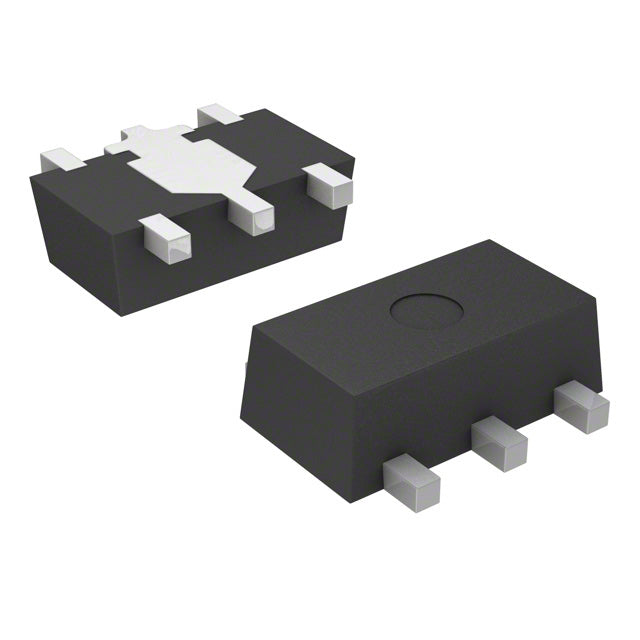
Torex Semiconductor Ltd XC6220A301PR-G

| Quantity | Unit Price | Total Price |
|---|---|---|
| 1 | $1.82 | $1.82 |
| 15+ | $0.41 | $6.15 |
| 25+ | $0.41 | $10.25 |
| 50+ | $0.38 | $19.00 |
| 100+ | $0.34 | $34.00 |
| N+ | $0.07 | Price Inquiry |
Request Quote / Inquiry
| Product attributes | Property Value |
| Manufacturer | Torex Semiconductor Ltd |
| Product Series | |
| Packaging | Tape & Reel (TR) | |
| Output Configuration | Active |
| Output Type | Positive |
| Number of Regulators | Fixed |
| Voltage - Input (Max) | 6V |
| Voltage - Output (Min/Fixed) | 3V |
| Voltage - Output (Max) | - |
| Voltage Dropout (Max) | 0.655V @ 1A |
| Current - Output | 1A |
| Current - Quiescent (Iq) | 18 μA |
| Current - Supply (Max) | 108 μA |
| PSRR | 50dB (1kHz) |
| Control Features | Enable |
| Protection Features | Over Current, Over Temperature |
| Operating Temperature | -40°C ~ 85°C (TA) |
| Grade | - |
| Qualification | - |
| Mounting Type | Surface Mount |
| Package / Case | SOT-89-5/6 |
| Supplier Device Package | SOT-89-5 |
| ROHS |  |
The Torex XC6220A301PR-G is a fixed-output linear regulator delivering 3.0V at up to 1A. Its low 18 μA quiescent current and 0.655V dropout at full load make it ideal for battery-operated and power-sensitive applications. The SOT-89-5 package offers a compact footprint with excellent thermal performance.
- Extended Battery Life: Ultra-low 18 μA quiescent current minimizes standby power draw.
- High Current Capacity: 1A output supports demanding loads without external pass transistors.
- Low Dropout: 0.655V dropout at 1A maintains regulation even with small input-output headroom.
- Clean Output: 50dB PSRR at 1kHz filters supply noise for sensitive circuits.
Battery-Powered IoT Sensors
With a low quiescent current of 18 μA, the XC6220A301PR-G extends battery life in wireless sensors that spend most of their time in standby mode.
Portable Medical Devices
The stable 3.0V output and 50dB PSRR at 1kHz ensure clean power for sensitive analog front-ends in glucose monitors and pulse oximeters.
Industrial Control Modules
Capable of delivering 1A, this regulator powers microcontrollers and communication interfaces in industrial automation panels where heat dissipation is a concern.
Smart Home Hubs
The SOT-89-5 package allows for compact PCB layouts, making it suitable for smart speakers and home automation controllers that require reliable 3V rails.
Automotive Accessories
Although not AEC-Q100 qualified, the robust dropout performance supports aftermarket dash cameras and GPS trackers operating from regulated 5V supplies.
FPGA Core Supplies
For low-power FPGAs requiring a 3.0V core, the 1A current capability and low dropout ensure consistent operation even during peak logic activity.
- Q: What is the output voltage of the XC6220A301PR-G?
- A: The fixed output voltage is 3.0V.
- Q: What is the maximum output current?
- A: It can deliver up to 1A of continuous output current.
- Q: What is the input voltage range?
- A: The input voltage is 3V, designed for stable regulation at this level.
- Q: What is the dropout voltage?
- A: The dropout voltage is 0.655V at a 1A load.
- Q: What is the quiescent current?
- A: The quiescent current is only 18 μA, ideal for battery-powered devices.
- Q: What package is available?
- A: It comes in a SOT-89-5 package.
 XC6220A301PR-G.pdf
- Q: What is the output voltage of the XC6220A301PR-G?
- A: The fixed output voltage is 3.0V.
- Q: What is the maximum output current?
- A: It can deliver up to 1A of continuous output current.
- Q: What is the input voltage range?
- A: The input voltage is 3V, designed for stable regulation at this level.
- Q: What is the dropout voltage?
- A: The dropout voltage is 0.655V at a 1A load.
- Q: What is the quiescent current?
- A: The quiescent current is only 18 μA, ideal for battery-powered devices.
- Q: What package is available?
- A: It comes in a SOT-89-5 package.