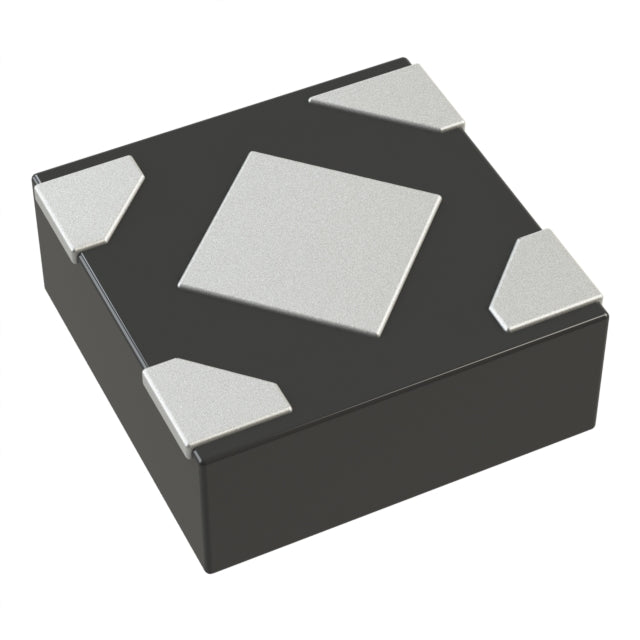
Torex Semiconductor Ltd XC6241B1819R-G

| Quantity | Unit Price | Total Price |
|---|---|---|
| 1 | $0.52 | $0.52 |
| 15+ | $0.51 | $7.65 |
| 25+ | $0.50 | $12.50 |
| 50+ | $0.47 | $23.50 |
| 100+ | $0.41 | $41.00 |
| N+ | $0.08 | Price Inquiry |
Request Quote / Inquiry
| Product attributes | Property Value |
| Manufacturer | Torex Semiconductor Ltd |
| Product Series | |
| Packaging | Cut Tape (CT) | Tape & Reel (TR) |
| Output Configuration | Positive |
| Output Type | Fixed |
| Number of Regulators | 1 |
| Voltage - Input (Max) | 6V |
| Voltage - Output (Min/Fixed) | 1.8V |
| Voltage - Output (Max) | - |
| Voltage Dropout (Max) | 0.55V @ 150mA |
| Current - Output | 150mA |
| Current - Quiescent (Iq) | 900 nA |
| Current - Supply (Max) | - |
| PSRR | 60dB (1kHz) |
| Control Features | Current Limit, Enable |
| Protection Features | Over Current, Short Circuit |
| Operating Temperature | -40°C ~ 105°C (TA) |
| Grade | - |
| Qualification | - |
| Mounting Type | Surface Mount |
| Package / Case | 4-XDFN Exposed Pad |
| Supplier Device Package | 4-USPQ-B05 (1x1) |
The XC6241B1819R-G from Torex Semiconductor is a fixed 1.8V low dropout linear regulator with a maximum output current of 150mA. Its standout feature is an ultra-low quiescent current of just 900nA, making it one of the most power-efficient regulators available. The dropout voltage is 0.55V at full load, and it offers 60dB PSRR at 1kHz. Housed in a tiny 4-USPQ-B05 (1x1mm) package, it is designed for battery-powered and energy-harvesting applications where power conservation is critical.
- Ultra-Low Quiescent Current (900nA): Unmatched for battery-powered devices requiring years of standby operation.
- 150mA Output Current: Sufficient for low-power MCUs, sensors, and wireless modules.
- Ultra-Tiny 1x1mm Package: Enables the smallest possible PCB designs for medical and wearable devices.
- 60dB PSRR at 1kHz: Provides adequate noise rejection for stable operation in mixed-signal environments.
Energy-Harvesting Systems
The 900nA quiescent current makes this LDO ideal for energy harvesting applications where the available current is extremely limited, such as solar or thermoelectric generators.
Always-On RTC and Backup Circuits
For real-time clocks and SRAM backup in meters and controllers, the XC6241B1819R-G maintains a stable 1.8V rail with negligible current draw, preserving data for years.
Bluetooth Low Energy Beacons
BLE beacons require ultra-low standby power. This regulator's 900nA IQ ensures the beacon can operate for extended periods on a coin cell battery.
Portable Medical Patches
Wearable health monitors that need to run for weeks on a tiny battery benefit from the ultra-low quiescent current and compact 4-USPQ-B05 package.
IoT Sensor Nodes with Duty Cycling
In duty-cycled systems, the regulator's low IQ during sleep mode significantly extends battery life, while the 150mA output supports active sensor readings.
- Q: What is the output voltage of the XC6241B1819R-G?
- A: The output voltage is fixed at 1.8V.
- Q: What is the maximum output current?
- A: It can deliver up to 150mA of output current.
- Q: What is the input voltage range?
- A: The input voltage must be above 1.8V plus dropout; typical range is 2.0V to 6.0V.
- Q: What is the dropout voltage?
- A: The dropout voltage is 0.55V at 150mA load.
- Q: What is the quiescent current?
- A: The quiescent current is extremely low at 900 nA (0.9 µA).
- Q: What is the PSRR?
- A: The power supply rejection ratio is 60dB at 1kHz.
 XC6241B1819R-G.pdf
- Q: What is the output voltage of the XC6241B1819R-G?
- A: The output voltage is fixed at 1.8V.
- Q: What is the maximum output current?
- A: It can deliver up to 150mA of output current.
- Q: What is the input voltage range?
- A: The input voltage must be above 1.8V plus dropout; typical range is 2.0V to 6.0V.
- Q: What is the dropout voltage?
- A: The dropout voltage is 0.55V at 150mA load.
- Q: What is the quiescent current?
- A: The quiescent current is extremely low at 900 nA (0.9 µA).
- Q: What is the PSRR?
- A: The power supply rejection ratio is 60dB at 1kHz.