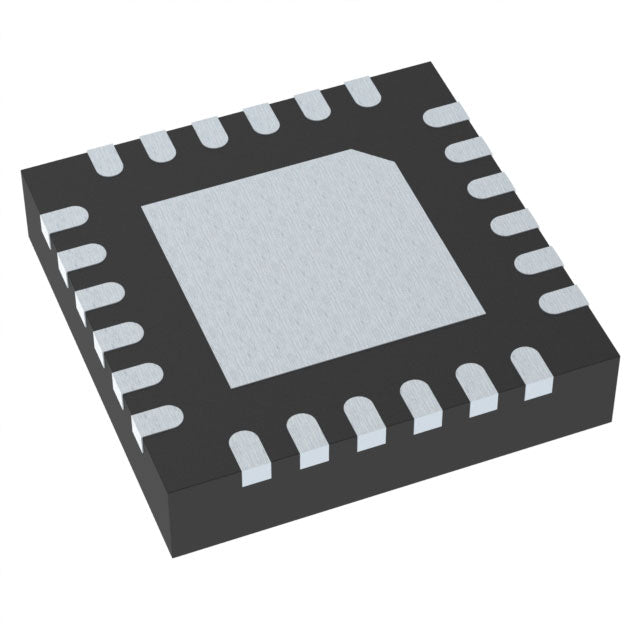
Texas Instruments BQ24190RGET

| Quantity | Unit Price | Total Price |
|---|---|---|
| 1 | $4.39 | $4.39 |
| 15+ | $4.25 | $63.75 |
| 25+ | $4.16 | $104.00 |
| 50+ | $3.93 | $196.50 |
| 100+ | $3.47 | $347.00 |
| N+ | $0.69 | Price Inquiry |
Request Quote / Inquiry
| Product attributes | Property Value |
| Manufacturer | Texas Instruments |
| Product Series | |
| Packaging | Cut Tape (CT) | Tape & Reel (TR) |
| Battery Chemistry | Lithium Ion/Polymer |
| Number of Cells | 1 |
| Current - Charging | Constant - Programmable |
| Programmable Features | - |
| Fault Protection | Over Current, Over Temperature, Over Voltage |
| Charge Current - Max | 4.5A |
| Battery Pack Voltage | 4.2V |
| Voltage - Supply (Max) | 17V |
| Interface | I2C |
| Operating Temperature | -40°C ~ 85°C (TA) |
| Grade | - |
| Qualification | - |
| Mounting Type | Surface Mount |
| Package / Case | 24-VFQFN Exposed Pad |
| Supplier Device Package | 24-VQFN (4x4) |
| ROHS |  |
The BQ24190RGET is a highly integrated switch-mode battery charge management IC from Texas Instruments. It is designed for single-cell Lithium Ion and Lithium Polymer batteries, supporting a charge current up to 4.5A and a battery voltage of 4.2V. The device features an I2C interface for precise control and includes essential fault protections like overcurrent and overtemperature. Housed in a 24-VFQFN package with an exposed pad for thermal management, it is a versatile solution for a wide range of portable applications.
- High Efficiency Charging: The switch-mode architecture ensures efficient power conversion, reducing heat generation.
- Flexible Programmability: I2C control allows designers to optimize charge voltage, current, and timing for specific battery needs.
- Integrated Safety: Built-in overcurrent, overvoltage, and overtemperature protection ensures safe and reliable charging.
- Thermally Efficient Package: The exposed pad in the 24-VFQFN package aids in heat dissipation, improving performance.
Portable Electronics
Ideal for devices like smartphones and tablets, the 4.5A charge current and I2C interface allow for efficient and customizable charging cycles.
Power Tools
Single-cell Li-Ion power tools benefit from the high charge current, enabling quick battery replenishment between uses.
Smart Home Devices
For battery-powered smart speakers, security cameras, and sensors, this charger provides reliable and safe charging in a compact VFQFN package.
Medical Devices
Portable medical monitoring equipment requires dependable charging; the BQ24190's robust protection features ensure safe operation.
Wearable Technology
Its small footprint and support for Li-Polymer batteries make it suitable for fitness trackers and smartwatches.
- Q: What battery chemistries are supported by the BQ24190RGET?
- A: This charger is designed for Lithium Ion and Lithium Polymer batteries.
- Q: How many cells can it charge?
- A: It is intended for single-cell (1s) battery packs.
- Q: What is the maximum charge current?
- A: The maximum charge current is 4.5A.
- Q: What is the target battery voltage?
- A: The target battery voltage is 4.2V.
- Q: What fault protection features are available?
- A: It includes protection against overcurrent, overtemperature, and overvoltage conditions.
- Q: What interface is used for control?
- A: It utilizes an I2C interface for programming and control.
 BQ24190RGET.pdf
- Q: What battery chemistries are supported by the BQ24190RGET?
- A: This charger is designed for Lithium Ion and Lithium Polymer batteries.
- Q: How many cells can it charge?
- A: It is intended for single-cell (1s) battery packs.
- Q: What is the maximum charge current?
- A: The maximum charge current is 4.5A.
- Q: What is the target battery voltage?
- A: The target battery voltage is 4.2V.
- Q: What fault protection features are available?
- A: It includes protection against overcurrent, overtemperature, and overvoltage conditions.
- Q: What interface is used for control?
- A: It utilizes an I2C interface for programming and control.