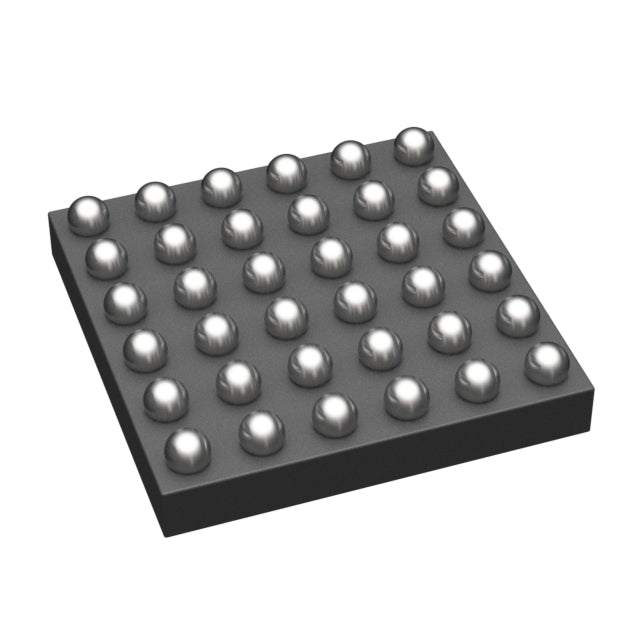
Texas Instruments BQ25960YBGR

| Quantity | Unit Price | Total Price |
|---|---|---|
| 1 | $4.33 | $4.33 |
| 15+ | $4.20 | $63.00 |
| 25+ | $4.10 | $102.50 |
| 50+ | $3.88 | $194.00 |
| 100+ | $3.42 | $342.00 |
| N+ | $0.68 | Price Inquiry |
Request Quote / Inquiry
| Product attributes | Property Value |
| Manufacturer | Texas Instruments |
| Product Series | |
| Packaging | Cut Tape (CT) | Tape & Reel (TR) |
| Battery Chemistry | Lithium Ion |
| Number of Cells | 1 |
| Current - Charging | Constant - Programmable |
| Programmable Features | Current, Timer |
| Fault Protection | Over Current, Over Temperature, Over Voltage, Reverse Current |
| Charge Current - Max | 8A |
| Battery Pack Voltage | 4V |
| Voltage - Supply (Max) | 12V |
| Interface | I2C |
| Operating Temperature | -40°C ~ 85°C (TA) |
| Grade | - |
| Qualification | - |
| Mounting Type | Surface Mount |
| Package / Case | 36-XFBGA, DSBGA |
| Supplier Device Package | 36-DSBGA (2.63x2.46) |
The BQ25960YBGR from Texas Instruments is a high-current, switch-mode battery charge management device designed for single-cell Lithium Ion batteries. It supports an impressive 8A charge current and a 4V battery voltage, making it ideal for fast-charging applications. The device integrates comprehensive fault protection, including overcurrent, overvoltage, and reverse current safeguards. Controlled via an I2C interface and available in a compact 36-XFBGA package, it is engineered for space-constrained, high-performance portable electronics.
- Ultra-Fast Charging: The 8A maximum charge current dramatically reduces charging time for large Li-Ion batteries.
- Precise Digital Control: The I2C interface allows for fine-tuning of charging parameters and real-time monitoring.
- Robust Protection Suite: Includes reverse current protection in addition to standard protections, enhancing system safety.
- Compact Form Factor: The 36-XFBGA package is ideal for designs where PCB space is at a premium.
Flagship Smartphones
The 8A charge current enables ultra-fast charging for high-capacity batteries in flagship smartphones, delivering a full charge in a fraction of the time.
High-Performance Tablets
Tablets with large batteries benefit from the high current and I2C control, allowing for optimized charging profiles and thermal management.
Portable Gaming Consoles
Devices with high power consumption require rapid top-ups; this charger's high current capability minimizes downtime for gamers.
Drones and Robotics
The compact DSBGA package and high current are suitable for drones where space is limited but fast battery replenishment is essential.
Industrial Handhelds
With an operating temperature range of -40°C to 85°C, it can be used in rugged handheld devices for field data collection and logistics.
- Q: What battery chemistry is the BQ25960YBGR designed for?
- A: This charger IC is specifically designed for Lithium Ion (Li-Ion) batteries.
- Q: How many cells does it support?
- A: It is configured for single-cell (1s) battery packs.
- Q: What is the maximum charge current?
- A: The BQ25960YBGR supports a high maximum charge current of 8A.
- Q: What is the battery voltage?
- A: The target battery voltage is 4V.
- Q: What fault protections are included?
- A: It features protection against overcurrent, overtemperature, overvoltage, and reverse current conditions.
- Q: What control interface does it use?
- A: It uses an I2C interface for configuration and monitoring.
 BQ25960YBGR.pdf
- Q: What battery chemistry is the BQ25960YBGR designed for?
- A: This charger IC is specifically designed for Lithium Ion (Li-Ion) batteries.
- Q: How many cells does it support?
- A: It is configured for single-cell (1s) battery packs.
- Q: What is the maximum charge current?
- A: The BQ25960YBGR supports a high maximum charge current of 8A.
- Q: What is the battery voltage?
- A: The target battery voltage is 4V.
- Q: What fault protections are included?
- A: It features protection against overcurrent, overtemperature, overvoltage, and reverse current conditions.
- Q: What control interface does it use?
- A: It uses an I2C interface for configuration and monitoring.