
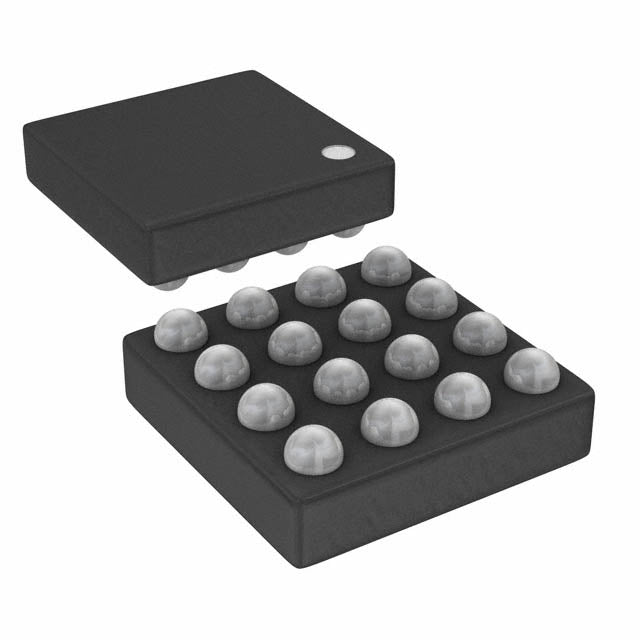
Lattice Semiconductor Corporation ICE40UL640-SWG16ITR50

Regular price
$94,999.99
Regular price
$99,999.99
Sale price
$94,999.99
| Quantity | Unit Price | Total Price |
|---|---|---|
| 1 | $94,999.99 | $94,999.99 |
| 15+ | $91,999.99 | $1,379,999.85 |
| 25+ | $89,999.99 | $2,249,999.75 |
| 50+ | $84,999.99 | $4,249,999.50 |
| 100+ | $74,999.99 | $7,499,999.00 |
| N+ | $15,000.00 | Price Inquiry |
Shipping calculated at checkout.
Request Quote / Inquiry
| Product attributes | Property Value |
| Manufacturer | Lattice Semiconductor Corporation |
| Product Series | iCE40 UltraLite™ |
| Packaging | | Tape & Reel (TR) |
| Number of LABs/CLBs | 80 |
| Number of Logic Elements/Cells | 640 |
| Total RAM Bits | 57344 |
| Number of I/O | 10 |
| Number of Gates | - |
| Voltage - Supply | 1.14V ~ 1.26V |
| Mounting Type | Surface Mount |
| Operating Temperature | -40°C ~ 100°C (TJ) |
| Grade | - |
| Qualification | - |
| Package / Case | 16-XFBGA, WLCSP |
| Supplier Device Package | 16-WLCSP (1.4x1.48) |
| ROHS |  |
Lattice iCE40 UltraLite™ FPGA - ICE40UL640-SWG16ITR50
The ICE40UL640-SWG16ITR50 is a high-performance, ultra-low-power FPGA from Lattice Semiconductor's iCE40 UltraLite™ family. Designed for space-constrained applications requiring programmable logic with minimal power consumption, this device delivers 640 logic elements in a compact 16-pin WLCSP package.
Key Features & Benefits
- Compact Form Factor: 16-WLCSP (1.4x1.48mm) package ideal for mobile, wearable, and IoT applications
- Low Power Operation: 1.14V ~ 1.26V supply voltage for energy-efficient designs
- Industrial Temperature Range: -40°C to 100°C (TJ) for harsh environment deployment
- Flexible I/O: 10 configurable I/O pins for interface versatility
- Embedded Memory: 57,344 total RAM bits for data buffering and processing
- RoHS Compliant: Meets environmental and regulatory standards
- Tape & Reel Packaging: Ready for automated assembly processes
Typical Applications
This FPGA is ideal for sensor aggregation, signal conditioning, I/O expansion, bridging interfaces, mobile accessories, battery-powered devices, and edge computing nodes where size, power, and programmability are critical.
 ICE40UL640-SWG16ITR50.pdf
×