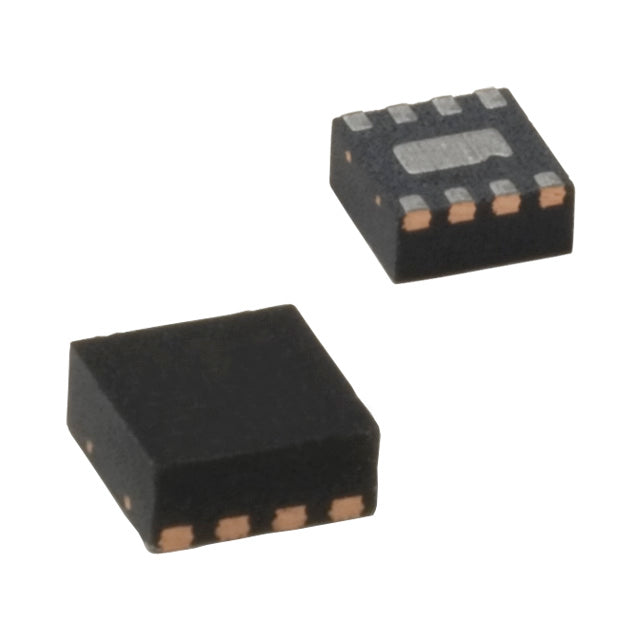
Microchip Technology MIC5310-LLYML-TR

| Quantity | Unit Price | Total Price |
|---|---|---|
| 1 | $3.90 | $3.90 |
| 15+ | $0.90 | $13.50 |
| 25+ | $0.88 | $22.00 |
| 50+ | $0.83 | $41.50 |
| 100+ | $0.74 | $74.00 |
| N+ | $0.15 | Price Inquiry |
Request Quote / Inquiry
| Product attributes | Property Value |
| Manufacturer | Microchip Technology |
| Product Series | |
| Packaging | Tape & Reel (TR) | |
| Output Configuration | Active |
| Output Type | Positive |
| Number of Regulators | Fixed |
| Voltage - Input (Max) | 5.5V |
| Voltage - Output (Min/Fixed) | 2.7V, 2.7V |
| Voltage - Output (Max) | - |
| Voltage Dropout (Max) | 0.1V @ 150mA, 0.1V @ 150mA |
| Current - Output | 150mA, 150mA |
| Current - Quiescent (Iq) | 120 μA |
| Current - Supply (Max) | 190 μA |
| PSRR | 70dB ~ 65dB (1kHz ~ 20kHz) |
| Control Features | Enable |
| Protection Features | Over Current, Over Temperature |
| Operating Temperature | -40°C ~ 125°C |
| Grade | - |
| Qualification | - |
| Mounting Type | Surface Mount |
| Package / Case | 8-VFDFN Exposed Pad, 8-MLF? |
| Supplier Device Package | 8-MLF? (2x2) |
| ROHS |  |
The MIC5310-LLYML-TR from Microchip Technology is a dual-output LDO regulator providing two fixed 2.7V rails, each capable of 150mA. With a low dropout of 0.1V and 120 µA quiescent current, it offers excellent efficiency for battery-powered devices. The 8-MLF (2x2) package provides a compact solution, while 70dB PSRR ensures clean, stable power for noise-sensitive applications.
- Dual Independent Rails: Two 2.7V outputs provide design flexibility for isolating sensitive circuits.
- Low Power Consumption: 120 µA quiescent current extends battery life in portable devices.
- High Noise Rejection: 70dB PSRR at 1kHz filters supply noise, ideal for audio and RF applications.
- Compact Footprint: 2x2mm MLF package saves PCB space for miniaturized designs.
Dual-Rail Sensor Systems
Two independent 2.7V outputs can power separate sensor arrays, providing isolation and stable voltage for precision measurement in industrial IoT.
Battery-Powered Audio Devices
The 2.7V rails are ideal for low-voltage audio codecs, with 70dB PSRR ensuring minimal power supply noise in portable players.
Wireless Transceivers
Dual 2.7V outputs can power both the RF front-end and baseband processor, maintaining clean, stable power for reliable communication.
Medical Monitoring Equipment
Low quiescent current and high PSRR make it suitable for battery-operated patient monitors requiring consistent 2.7V supplies.
Portable Instrumentation
The compact 2x2mm package and low dropout enable use in handheld multimeters and field test equipment.
Embedded Systems
Dual 2.7V rails can power separate digital and analog sections, reducing cross-talk and improving system reliability.
- Q: What is the output voltage of the MIC5310-LLYML-TR?
- A: Both channels output a fixed 2.7V, providing dual independent 2.7V rails.
- Q: What is the maximum current per channel?
- A: Each channel can deliver up to 150mA, with a combined 300mA output capability.
- Q: What is the input voltage range?
- A: The input voltage range is from 2.7V up to the absolute maximum rating, with typical operation at 2.7V.
- Q: What is the dropout voltage?
- A: The dropout voltage is 0.1V at 150mA per channel, allowing efficient regulation with minimal headroom.
- Q: What is the quiescent current?
- A: The quiescent current is 120 µA, making it suitable for battery-powered applications.
- Q: What package is available?
- A: It is available in an 8-MLF (2x2) package, ideal for space-constrained designs.
 MIC5310-LLYML-TR.pdf
- Q: What is the output voltage of the MIC5310-LLYML-TR?
- A: Both channels output a fixed 2.7V, providing dual independent 2.7V rails.
- Q: What is the maximum current per channel?
- A: Each channel can deliver up to 150mA, with a combined 300mA output capability.
- Q: What is the input voltage range?
- A: The input voltage range is from 2.7V up to the absolute maximum rating, with typical operation at 2.7V.
- Q: What is the dropout voltage?
- A: The dropout voltage is 0.1V at 150mA per channel, allowing efficient regulation with minimal headroom.
- Q: What is the quiescent current?
- A: The quiescent current is 120 µA, making it suitable for battery-powered applications.
- Q: What package is available?
- A: It is available in an 8-MLF (2x2) package, ideal for space-constrained designs.