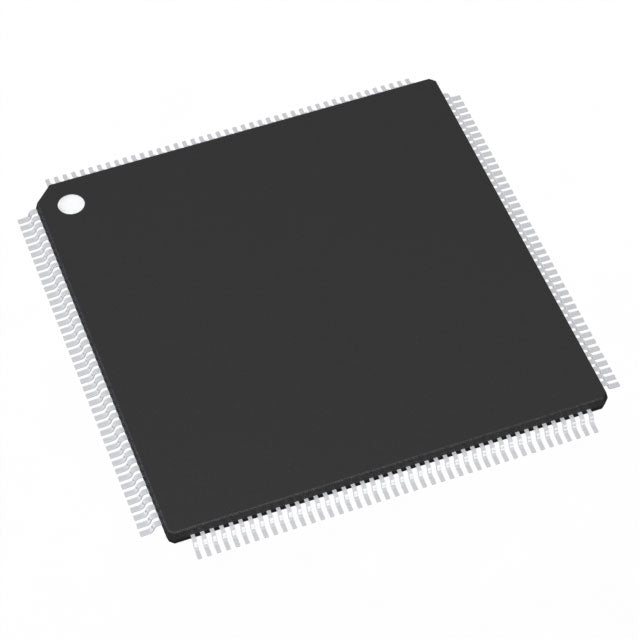
STMicroelectronics SPC574K72E7C6FAR

| Quantity | Unit Price | Total Price |
|---|---|---|
| 1 | $63.19 | $63.19 |
| 15+ | $14.54 | $218.10 |
| 25+ | $14.22 | $355.50 |
| 50+ | $13.43 | $671.50 |
| 100+ | $11.85 | $1,185.00 |
| N+ | $2.37 | Price Inquiry |
Request Quote / Inquiry
| Product attributes | Property Value |
| Manufacturer | STMicroelectronics |
| Product Series | MPC57xx |
| Packaging | Tray | NULL |
| Core Processor | e200z2, e200z4, e200z4 |
| Core Size | 32-Bit Tri-Core |
| Speed | 80MHz/160MHz |
| Connectivity | CANbus, Ethernet, FlexRay, I2C, LINbus, SPI, UART/USART |
| Peripherals | DMA, LVD, POR, Zipwire |
| Number of I/O | - |
| Program Memory Size | 2.5MB (2.5M x 8) |
| Program Memory Type | FLASH |
| EEPROM Size | 64K x 8 |
| RAM Size | 64K x 8 |
| Voltage - Supply (Vcc/Vdd) | 3V ~ 5.5V |
| Data Converters | A/D 12b SAR, 16b Sigma-Delta |
| Oscillator Type | Internal |
| Operating Temperature | -40°C ~ 125°C (TA) |
| Grade | Automotive |
| Qualification AEC | AEC-Q100 |
| Mounting Type | Surface Mount |
| Supplier Device Package | 176-eLQFP (24x24) |
| Package / Case | 176-LQFP Exposed Pad |
| ROHS |  |
The STMicroelectronics SPC574K72E7C6FAR is a high-reliability multi-core MCU for automotive and industrial safety applications. It combines an e200z2 core at 80MHz and two e200z4 cores at 160MHz, delivering 2.5MB flash and 64KB RAM. Operating from 3V to 5.5V, it includes DMA, LVD, POR, and Zipwire interfaces. The 176-LQFP exposed pad package ensures excellent thermal performance from -40°C to 125°C.
- Multi-core redundancy: Three cores enable lockstep or independent execution for safety-critical functions.
- High temperature tolerance: 125°C rating supports under-hood and industrial high-heat applications.
- Large flash: 2.5MB accommodates complex AUTOSAR stacks and calibration data.
- Enhanced thermal management: Exposed pad package improves heat transfer to PCB.
Advanced Driver Assistance Systems (ADAS)
The multi-core architecture (e200z2 + dual e200z4) provides redundant processing for sensor fusion and safety-critical algorithms.
Electric Vehicle Battery Management
With 2.5MB flash and Zipwire interface, it manages cell monitoring and balancing across multiple battery modules.
Engine Management Systems
The 160MHz cores handle real-time combustion control, while DMA and LVD ensure reliable operation under vibration and temperature extremes.
Chassis Control (ABS/ESC)
High-speed processing and POR/WDT features support fail-safe operation for anti-lock braking and stability control.
Industrial Robotics
The 125°C rating and exposed pad package allow deployment in high-heat factory environments without active cooling.
Railway Signaling Systems
Multi-core redundancy and wide voltage range (3-5.5V) meet safety integrity levels for train control applications.
- Q: What is the architecture of the SPC574K72E7C6FAR?
- A: It features a multi-core design with one e200z2 and two e200z4 cores, running at 80MHz/160MHz.
- Q: How much flash memory is available?
- A: It provides 2.5MB of program flash and 64KB of RAM.
- Q: What is the operating temperature range?
- A: It is rated for -40°C to 125°C, suitable for extreme automotive environments.
- Q: What package does it use?
- A: It comes in a 176-LQFP Exposed Pad package for improved thermal dissipation.
 SPC574K72E7C6FAR.pdf
- Q: What is the architecture of the SPC574K72E7C6FAR?
- A: It features a multi-core design with one e200z2 and two e200z4 cores, running at 80MHz/160MHz.
- Q: How much flash memory is available?
- A: It provides 2.5MB of program flash and 64KB of RAM.
- Q: What is the operating temperature range?
- A: It is rated for -40°C to 125°C, suitable for extreme automotive environments.
- Q: What package does it use?
- A: It comes in a 176-LQFP Exposed Pad package for improved thermal dissipation.