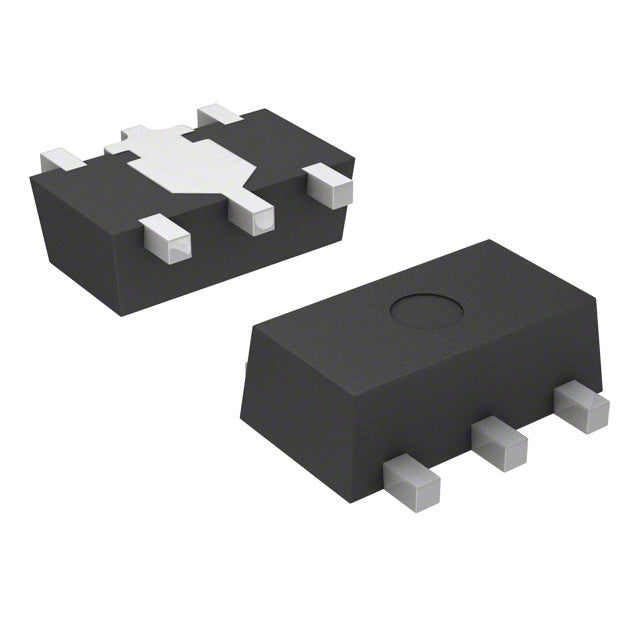
Torex Semiconductor Ltd XC6220A25BPR-G

| Quantity | Unit Price | Total Price |
|---|---|---|
| 1 | $1.82 | $1.82 |
| 15+ | $0.41 | $6.15 |
| 25+ | $0.41 | $10.25 |
| 50+ | $0.38 | $19.00 |
| 100+ | $0.34 | $34.00 |
| N+ | $0.07 | Price Inquiry |
Request Quote / Inquiry
| Product attributes | Property Value |
| Manufacturer | Torex Semiconductor Ltd |
| Product Series | |
| Packaging | Tape & Reel (TR) | |
| Output Configuration | Active |
| Output Type | Positive |
| Number of Regulators | Fixed |
| Voltage - Input (Max) | 6V |
| Voltage - Output (Min/Fixed) | 2.55V |
| Voltage - Output (Max) | - |
| Voltage Dropout (Max) | 0.655V @ 1A |
| Current - Output | 1A |
| Current - Quiescent (Iq) | 18 μA |
| Current - Supply (Max) | 108 μA |
| PSRR | 50dB (1kHz) |
| Control Features | Enable |
| Protection Features | Over Current, Over Temperature |
| Operating Temperature | -40°C ~ 85°C (TA) |
| Grade | - |
| Qualification | - |
| Mounting Type | Surface Mount |
| Package / Case | SOT-89-5/6 |
| Supplier Device Package | SOT-89-5 |
| ROHS |  |
The Torex XC6220A25BPR-G is a fixed-output LDO linear regulator providing a stable 2.55V at up to 1A. With a low 18 μA quiescent current and 0.655V dropout, it is optimized for battery-powered and noise-sensitive applications. The SOT-89-5 package ensures compact integration with excellent thermal performance.
- Stable 2.55V Output: Precise fixed voltage for specialized ICs requiring non-standard rails.
- High Efficiency: Low 18 μA quiescent current reduces power loss in standby mode.
- Robust Current Delivery: 1A output supports high-load applications without droop.
- Compact Package: SOT-89-5 footprint saves board space while dissipating heat effectively.
Precision Analog Circuits
The 2.55V output provides a stable reference for precision ADCs and DACs, with 50dB PSRR reducing power supply noise in measurement equipment.
Wireless Communication Modules
For RF transceivers requiring a 2.55V rail, this LDO delivers 1A with low dropout, ensuring consistent performance during transmission bursts.
Battery-Powered Handheld Tools
Low 18 μA quiescent current extends runtime for portable diagnostic tools, while the 1A capacity supports motor drivers and displays.
LED Driver Bias Supplies
The fixed 2.55V output can bias LED driver ICs in lighting systems, providing a clean supply that minimizes flicker.
Embedded Systems
For microcontrollers with 2.55V I/O, this regulator offers a dedicated power rail, simplifying power design in mixed-voltage systems.
Audio Equipment
The low noise characteristics and 50dB PSRR make it suitable for audio codecs, preserving signal integrity in portable players.
- Q: What is the output voltage of the XC6220A25BPR-G?
- A: The fixed output voltage is 2.55V.
- Q: What is the maximum output current?
- A: It can deliver up to 1A of continuous output current.
- Q: What is the input voltage range?
- A: The input voltage is specified at 2.55V, with a typical operating range suitable for this fixed-output LDO.
- Q: What is the dropout voltage?
- A: The dropout voltage is 0.655V at a 1A load.
- Q: What is the quiescent current?
- A: The quiescent current is a low 18 μA, ideal for battery-powered applications.
- Q: What package is available?
- A: It comes in a compact SOT-89-5 package.
 XC6220A25BPR-G.pdf
- Q: What is the output voltage of the XC6220A25BPR-G?
- A: The fixed output voltage is 2.55V.
- Q: What is the maximum output current?
- A: It can deliver up to 1A of continuous output current.
- Q: What is the input voltage range?
- A: The input voltage is specified at 2.55V, with a typical operating range suitable for this fixed-output LDO.
- Q: What is the dropout voltage?
- A: The dropout voltage is 0.655V at a 1A load.
- Q: What is the quiescent current?
- A: The quiescent current is a low 18 μA, ideal for battery-powered applications.
- Q: What package is available?
- A: It comes in a compact SOT-89-5 package.